Mikel Arteta’s Evolution: How He Built a New Arsenal
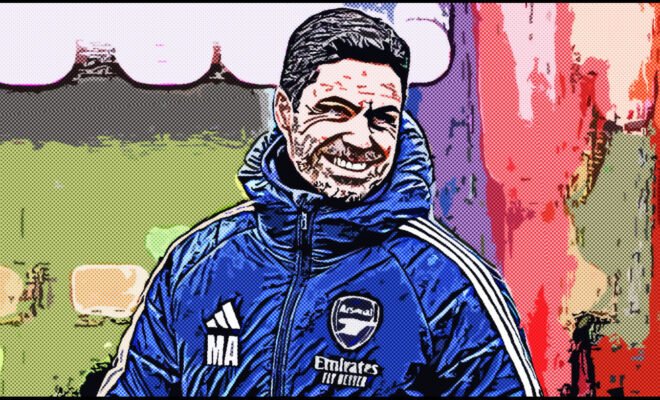
Arsenal are no longer just improving under Mikel Arteta. They are winning matches in different ways, and that shift has changed how they are viewed. This is now a team that can dominate possession and control territory, but it is just as comfortable managing space without the ball, slowing games down, and deciding outcomes through pressure, duels, and set pieces.
Over the course of a season, that range has become one of their defining strengths, and understanding how it emerged tells you far more about Arteta than the usual labels attached to him.
He is still often described as a Guardiola disciple, which explains part of the picture but leaves too much out. What has taken shape at Arsenal reflects a blend of influences that have been absorbed, tested, and refined into something more complete.
Positional structure still underpins everything, but it now sits alongside physical dominance, defensive organisation, and a level of tactical flexibility that allows Arsenal to adjust within matches without losing clarity. This is not a single idea applied well. It is a model built over time.
The foundation was laid in Barcelona
Arteta’s understanding of football begins with space and how players relate to each other within it. His time at La Masia placed him inside a system where positioning was not just a tool but the language of the game itself. Players were taught how to create passing lanes, how to stretch defensive shapes, and how to manipulate opponents through movement rather than relying on individual actions.
That influence remains visible in Arsenal’s build-up. Width is held to stretch the opposition, while central players position themselves between the lines to offer constant access points. The aim stays consistent across matches, which is to create a free player through structure and then progress the ball into that space.
The right side offers the clearest example of this. Ben White supports underneath, Martin Ødegaard operates between the lines, and Bukayo Saka holds the width, with their positioning working together to pull defenders out of shape before the ball moves through the next available lane.
This pattern has been especially effective against mid-blocks, including matches against Liverpool where Arsenal repeatedly found access down that flank through timing and rotation. At the same time, there is restraint in how far that movement goes.
Players rotate within defined reference points, which allows the team to maintain balance across the pitch. That balance between freedom and control traces directly back to Arteta’s earliest football education.
Structure was never optional
Beyond Barcelona, Arteta’s development deepened in environments shaped by structured positional play, where organisation across phases became just as important as attacking patterns. That influence shows in how Arsenal approach build-up and transitions, with very little left to chance.
The back line adjusts based on pressure, midfield support appears in the right spaces, and passing lanes remain open even when opponents press aggressively. What stands out more is what happens behind the ball when Arsenal attack.
A rest-defence structure forms almost automatically, with centre-backs holding position and supported by a midfielder or full-back, ensuring that the team is already prepared for the moment possession is lost.
This preparation reduces exposure to transitions and allows Arsenal to commit players forward with confidence. Once that platform is in place, the team is free to accelerate play when opportunities appear. The structure does not restrict them. It enables them, creating a base that supports both control and progression within the same sequence.
Guardiola sharpened the detail
Working under Guardiola refined Arteta’s understanding of control, particularly in how structure and pressing can dictate the flow of a match. That influence is visible in the detail of Arsenal’s preparation, where roles are clearly defined, movements are rehearsed, and pressing triggers are understood across the team.
In possession, inverted full-backs step into midfield to create numerical superiority, allowing Arsenal to break pressure and establish control in central areas. Out of possession, the first line directs play toward specific zones, with the rest of the team moving in coordination to close passing lanes and limit options.

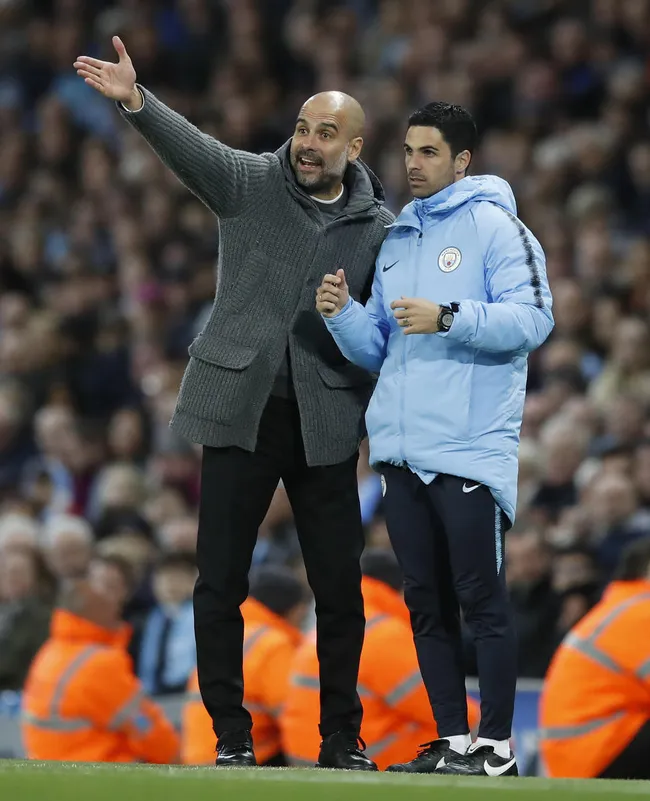
There is a clarity in how each phase is meant to function.
Where Arteta has evolved beyond that influence is in how he applies it. Possession remains important, but it is not treated as the sole method of control. Arsenal are willing to play forward earlier when space opens and will bypass pressure with longer passes when required.
The structure creates access, but the team does not linger once that access is achieved. It moves forward with intent, adding a level of directness that makes their play less predictable.
The Moyes influence gave it edge
If the Barcelona and Guardiola influences built the framework, Arteta’s time under David Moyes gave the team its edge. That period at Everton exposed him to a version of football built on organisation, discipline, and physical competitiveness, and those qualities now sit at the core of Arsenal’s identity.
Out of possession, Arsenal operate with clear purpose. The 4-4-2 structure protects central areas and guides the opponent toward the flanks, where pressure can be applied more effectively. The press is selective rather than constant, but when it arrives, it is coordinated and supported by the rest of the team shifting into position. This creates a form of control that does not rely on possession.

That control has been evident in matches against Manchester City, where Arsenal have consistently limited central progression and forced play into wider areas that can be managed. Alongside this, physicality has become a defining trait. Arsenal compete more aggressively in duels, defend their box with authority, and cover ground in midfield through players such as Declan Rice, while Gabriel and William Saliba provide dominance in defensive situations.
Set pieces complete this layer. Under Nicolas Jover, Arsenal have turned them into a reliable source of goals, with structured routines built around precise delivery and coordinated movement. The team has ranked among the league’s most effective from set plays in recent seasons, adding another dimension to how they can win matches.
This shift has reduced reliance on open-play fluency and introduced a level of control over key moments that did not previously exist.
Control still outweighs risk
As Arsenal have become more complete, control has taken priority over risk in most matches, especially against teams that sit in deeper blocks. The structure remains Arsenal’s key, the ball circulation is patient, and the team is comfortable moving opponents from side to side while waiting for space to appear or mistakes to occur.
That approach brings stability, but it also shapes how chances are created.
Against low blocks, Arsenal rarely force the issue early. The ball moves through defined patterns, with the aim of shifting defensive lines rather than breaking them immediately. The expectation is that sustained movement will eventually create a gap, whether through positional rotation, a lapse in concentration, or a moment of imbalance in the defensive shape.
There are moments where the alternative is available. Earlier forward passes, quicker vertical combinations, or more direct attempts to disrupt structure can create transition opportunities before the opponent resets. Those moments exist, but they are used selectively.
The trade-off is clear.
By prioritizing control, Arsenal limit exposure to transitions and maintain territorial dominance. At the same time, that patience can slow the tempo of attacks and reduce the number of chaotic situations where defences are less organised.
It is not a lack of intent. It is a choice.
Arteta has built a team that trusts its structure to create openings over time. The next step may be finding the balance where control remains, but risk is introduced earlier when the game state allows it.
Wenger’s later years shaped the guardrails
Arsène Wenger’s influence on Arteta is often linked to attacking football, but the more significant impact may come from what Arteta saw during the later stages of Wenger’s tenure. That period highlighted how quickly the game can move on and how costly it can be when structure and planning fall behind.
Tactical preparation became less specific, with matches approached through a consistent idea rather than tailored plans. Opponents learned how to anticipate and exploit that predictability. Defensive structure also weakened, leaving the team vulnerable in transitions and making it harder to control matches without the ball.
Squad construction followed a similar path. There was no shortage of talent, but the pieces did not align. Profiles overlapped, roles blurred, and additions often addressed immediate needs rather than contributing to a coherent system. The result was a team capable of moments but lacking sustained control.

Arteta experienced that period directly, and the response is clear in how he has built Arsenal. Recruitment now follows a defined logic, with each player fitting a role within the system. Physical and tactical demands are consistent across the squad, and preparation is tailored to opponents, with structures adjusting based on the challenge.
The attacking freedom associated with Wenger remains to a limit, but it is now combined and part of a framework that protects the team. The lessons from that earlier period are visible in how deliberately this version of Arsenal has been constructed.
Arsenal are built to handle the game in front of them
What stands out most about Arteta’s Arsenal is how complete they feel. The team can dominate possession when required, control space without the ball, accelerate quickly in transition, and defend deeper when protecting a lead. These adjustments happen within a stable framework, with shape shifting across phases while the underlying principles remain consistent.
Players understand their roles in each moment, which allows the team to adapt without losing organisation. Opponents are forced to deal with a side that can present different challenges within the same match, making preparation more difficult and increasing Arsenal’s control over how games are played.
The Arteta model
All of these influences come together in a system that reflects Arteta’s own thinking. Positional structure provides control, defensive organisation protects space, physicality strengthens key moments, and set pieces create additional opportunities. Vertical progression adds speed, while flexibility allows the team to adapt to different situations.
What stands out is how naturally these elements fit together. The system does not feel like a collection of borrowed ideas. It feels coherent, shaped over time through experience and refinement.
Conclusion
Arteta’s evolution as a coach reflects a process of deliberate construction, with each stage of his career contributing to the model now visible at Arsenal. The team plays with clarity, adapting to different challenges while maintaining a consistent identity built on structure, control, and competitive edge.
By extension, Arsenal’s rise is not the product of a single influence.
It is the result of a manager who has taken what he has learned, shaped it, and built something that now stands on its own.

Leave a reply
You must be logged in to post a comment.


