Arsenal Financial Results 2024/25: Record £691m Revenue and Stronger Financial Position
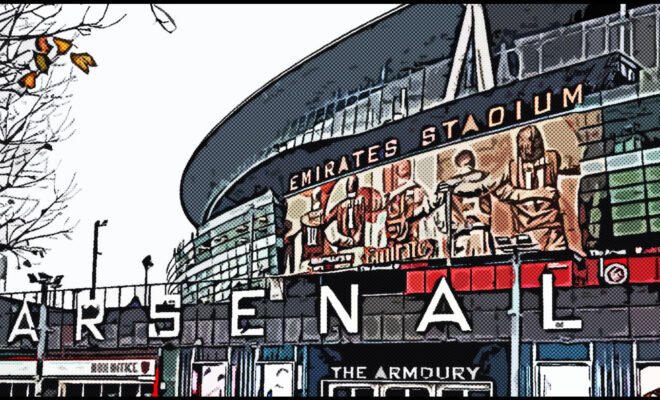
Arsenal’s financial results for the year ended 31 May 2025 show a club operating at record income levels while moving closer to break even than at any point in recent seasons.
Revenue reached £691.0 million, up from £616.6 million in 2024 and £466.7 million in 2023. The pre tax loss narrowed sharply to £1.4 million, compared to £17.7 million in 2024 and £52.1 million in 2023.
For Arsenal supporters, those figures matter because they sit at the heart of the club’s competitive model. The team has returned to sustained Champions League football, expanded its commercial base, and continued investing heavily in the squad. The financial question is whether that growth now provides a stable foundation, or whether it still depends on variables that can shift from season to season.
It also helps to explain what sits inside that £1.4 million loss. The 2024 to 2025 result includes £15.2 million of exceptional impairment of player registrations, which reflects the club recognising it will not recoup the full book value of certain player assets. That accounting adjustment can materially affect reported profit even if it does not represent a fresh cash outflow at that moment. The club also reports a profit before tax excluding exceptional costs of £13.8 million, which provides an alternative view of the year once that one off charge is removed.
The broader trajectory is positive, but the mechanics still matter. A meaningful portion of the improvement continues to rely on player trading profits and access to ownership support. Arsenal look stronger financially than they did in 2023. The key issue is whether that strength is now structural or still conditional.
Revenue Growth: Champions League and Commercial Power
Over the past three seasons, Arsenal Revenue has risen sharply, with growth visible across matchday, broadcasting and commercial lines.
Year Revenue (£m)
2022/23 466.7
2023/24 616.6
2024/25 691.0
The jump from 2023 to 2024 followed the return to Champions League football. The further rise in 2024 to 2025 reflects deeper European progression alongside continued commercial expansion. Together, those two elements explain the scale of the uplift. European performance has boosted central distributions and matchday income, while improved sponsorship terms and retail performance have lifted the commercial base.
Matchday Revenue
Matchday income increased from £102.6 million in 2023 to £131.7 million in 2024 and then to £153.9 million in 2025.
The increase is primarily explained by fixture volume. Home matches rose from 24 in 2023 to 25 in 2024 and 30 in 2025. Average attendance remained stable at just over 60,000. The revenue growth therefore came from additional high value European fixtures rather than expanded stadium capacity.
This distinction is important. Emirates Stadium operates close to full capacity, so matchday upside depends largely on the number and quality of games played. Deep Champions League runs expand that income line. Early exits or failure to qualify would reduce it. Matchday revenue now reflects competitive consistency in Europe as much as domestic demand.
Broadcasting Revenue
Broadcast income rose from £191.2 million in 2023 to £262.3 million in 2024 and £272.8 million in 2025.
The major uplift in 2024 followed Champions League qualification. The further increase in 2025 reflects progression to the semi finals. Broadcasting income has therefore become closely tied to European status. It is no longer a neutral baseline. It expands and contracts with continental performance.
This reinforces a central theme of the accounts. Sustained Champions League participation underpins a meaningful share of Arsenal’s revenue base. European qualification is not simply a sporting objective. It is a financial stabiliser.
Commercial Revenue
Commercial income increased from £169.3 million in 2023 to £218.3 million in 2024 and £263.2 million in 2025.
Renewals and extensions with key partners such as adidas and Emirates, alongside improved secondary partnerships, drove this growth. Of the three major income streams, commercial is the least directly linked to match results in a single season. It reflects brand positioning, global reach and negotiation leverage.
However, it remains cyclical over longer periods. Contract renewals and sponsor appetite are not guaranteed. The strong commercial trajectory from 2023 to 2025 strengthens Arsenal’s baseline, but it also creates expectations that must be maintained in future renewal cycles.
Costs: Wage Bill and Amortisation Pressure
Revenue growth has been accompanied by rising costs. The key question is not whether income has increased, but how much flexibility remains once wages, amortisation and operating expenses are accounted for.
Competing consistently at Champions League level raises the structural cost base. Player retention, squad depth and infrastructure all carry ongoing financial commitments.
Arsenal Wage Bill
The wage bill rose from £234.8 million in 2023 to £327.8 million in 2024 and £346.8 million in 2025.
That increase of more than £110 million across two seasons reflects both squad investment and competitive positioning. Wages represent the most immediate and recurring commitment in the accounts.
In 2025, wages equated to roughly 50 percent of revenue. That ratio is considered manageable at elite level, but it remains sensitive to revenue volatility. Should Champions League income fall, the wage ratio would rise even if absolute wages remained unchanged. This dynamic explains why European consistency carries financial weight beyond prestige.
Amortisation Explained
Amortisation spreads transfer fees across the length of player contracts. A £100 million signing on a five year contract results in an annual amortisation charge of around £20 million.
Amortisation and impairment of player registrations were £139.1 million in 2023, £171.1 million in 2024 and £176.6 million in 2025.
These figures reflect the recruitment cycle that followed Arsenal’s return to contention. Transfer spending does not disappear from the accounts once a window closes. Its accounting impact continues across multiple seasons. Even if new spending moderates, amortisation remains elevated until those contracts run down or players are sold.
This is one reason strong revenue does not automatically translate into accounting profit. Squad building costs are embedded into the structure.
Operating Costs
Operating costs increased from £147.9 million in 2024 to £200.8 million in 2025.
The club attributes the rise to staging costs, direct costs linked to higher revenues, property matters and inflation. Larger European schedules and expanded commercial operations increase activity levels, which in turn increase costs.
Higher income brings higher obligations. Margins depend on revenue rising faster than the associated expense base. In 2025, Arsenal narrowed losses, but within a cost environment that also expanded materially.
Profitability: Closer, But Not Fully Self Sufficient
Despite record revenue, Arsenal reported a £1.4 million loss before tax in 2025.
Player trading profits were £81.2 million in 2025, compared to £51.1 million in 2024 and £10.7 million in 2023.
Those gains played a significant role in bringing the bottom line close to balance. Player trading can be a legitimate and recurring part of a modern football model, but it remains variable. It depends on timing, market demand and squad strategy. Planning around it requires caution.
Adjusted operating profit was £143.0 million in 2025 before amortisation and player trading. Once amortisation is included, profitability narrows substantially. Different analysts emphasise different layers of this calculation. Some focus on day to day operating performance before player trading. Others look directly at the statutory pre tax result. Both approaches stem from the same set of figures but highlight different financial pressures.
The underlying theme remains consistent. Arsenal have strengthened revenue and narrowed losses, yet sustained profitability without reliance on player sales has not been fully established.
Cash Position and Ownership Support
Cash at year end stood at £56.0 million, down from £66.8 million in 2024.
A year end cash figure represents a point in time rather than the full story of the year’s movements. Season ticket timing, European matchday receipts and commercial inflows do not arrive evenly. Transfer instalments and operating costs also follow specific schedules.
Cash management is therefore distinct from profitability. Arsenal retain access to a £100 million working capital facility with Barclays, and funding continues to come mainly from KSE UK Inc. These mechanisms provide liquidity flexibility across fluctuating football cycles.
The book value of player registrations declined from £486.6 million in 2024 to £399.0 million in 2025, reflecting amortisation exceeding new additions in that year.
Net finance charges totalled £17.7 million in 2025, including £4.3 million related to notional interest applied where transfers are paid in instalments. Paying transfer fees over time supports cash flow management, but it also creates additional accounting finance costs.
Ownership support therefore remains an important stabiliser, particularly when managing instalment structures, seasonal cash flows and squad investment timing.
The So What?
Arsenal’s financial results show a club operating at record income levels while maintaining competitive investment.
Revenue growth has been driven by sustained Champions League participation and strong commercial execution. Costs have risen in parallel, reflecting wage commitments, amortisation from prior recruitment and expanded operating activity.
The interaction of these forces defines Arsenal’s position.
First, Champions League qualification underpins both broadcasting and matchday revenue.
Second, player trading contributes meaningfully to near break even outcomes.
Third, cost commitments from prior investment remain embedded for several seasons.
Arsenal now possess a revenue base capable of supporting elite competition. The margin for error, however, remains linked to European consistency and disciplined squad management.
Where Arsenal Financially Stand After 2024 to 2025
- Revenue is at a record £691.0 million, driven by Champions League and commercial growth
- Wage costs and amortisation have risen significantly over two seasons
- The pre tax loss has narrowed to £1.4 million but profitability still depends on player trading
- Cash reserves have fallen modestly and owner funding remains important
- Financial strength has improved, but resilience still depends on sustained European qualification

Leave a reply
You must be logged in to post a comment.


