Antonio Nusa Scouting Report: A Left-Wing Option Arsenal Should Be Watching
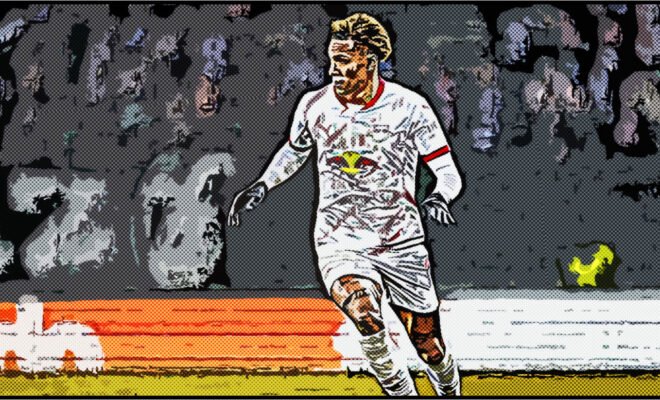
Antonio Nusa is easy to like. He is quick, direct, two-footed in the way he attacks defenders, and already productive enough at senior international level to attract attention beyond Germany.
The Arsenal angle is clear. Mikel Arteta’s side still need more threat from the left side of attack. Gabriel Martinelli brings pace and depth running. Leandro Trossard brings craft and finishing. Nusa would bring something slightly different: repeated 1v1 disruption.
The question is less about talent. The question is whether Nusa makes sense for Arsenal at the price RB Leipzig may demand.
Who Is Antonio Nusa?
Antonio Eromonsele Nordby Nusa is a 21-year-old Norwegian winger at RB Leipzig. He was born in Langhus, near Oslo, and has Nigerian heritage through his father. He is 5’11”, right-footed, and plays mainly from the left wing, with experience on the right and as a second striker.
His pathway has moved fast. Nusa came through Stabæk, joined Club Brugge in 2021, then moved to RB Leipzig in August 2024 for a reported €21 million. His contract runs until June 2029, which gives Leipzig strong leverage.
He has senior experience in Norway, Belgium, Germany, the Champions League, and with Norway’s national team. Our scouting credits him with 25 senior international appearances and eight goals for Norway.
What Kind of Player Is He?
Nusa is a direct left-sided winger whose game is built around receiving wide, attacking defenders, and carrying the ball into dangerous areas.
He is not a touchline crosser in the traditional sense. His best work comes when he receives near the left wing, opens his body toward the pitch, and drives at the full-back. From there, he can cut inside onto his right foot, attack the outside lane, or move into the half-space to combine.
His first touch is one of the reasons he’s so effective out wide. He can receive under pressure without needing to stop the ball dead. He often controls while moving, which helps him turn a simple wide pass into an attacking action (think about Arteta’s post Champions League final comments on PSG’s players individual actions.) His play loses value if he has to slow down before taking on the defender.
Dribbling is the core of his identity. He uses body feints, shoulder drops, stepovers, and sharp changes of pace to create separation. He does not simply overpower defenders. He manipulates them. His comfort going inside or outside makes him difficult to read, and his ability to use both feet in carrying actions prevents full-backs from forcing him into an obvious weaker side.
Physically, he has enough pace to threaten in transition. His Bundesliga top speed is recorded at 34.64 km/h, and he completed 457 sprints across 31 league appearances in 2025-26. He is quick over the first few yards, but his main edge is the combination of acceleration, balance, and direction change rather than straight-line speed alone.
He is also stronger in contact than his frame suggests. At 5’11” and 161 lbs, he is not a power winger, and he does not dominate defenders physically. He protects the ball through body shape, balance, and timing. That shows up in the foul numbers. He won 64 fouls across 31 league appearances, which speaks to how often defenders have to stop him illegally once he starts moving.
His ball-striking is more promise than polish. From the left, he looks most comfortable cutting inside and shooting across goal with his right foot. He can generate power from distance, but his shot selection still needs work. His 0.08 xG per shot points to a player who sometimes shoots early or from lower-value areas.
The same applies to his finishing. Four league goals from 61 shots is acceptable for his role, but it is not efficient. His goals tend to come from direct carries and open-play actions rather than repeatable box movement, back-post timing, or set-piece threat. He does not yet have a clear go-to finish.
As a passer, he is functional rather than creative in a controlled sense. He can play simple combinations, slip passes into runners, and find dangerous balls when the picture is clear. His final-third passing still lacks consistency, and his crossing accuracy of 20.3% shows the gap between getting into good areas and delivering the right ball.
That is probably the cleanest way to understand him. He is a ball-carrier who can pass, not a pass-first creator who also carries.
His movement is instinctive. He usually starts wide on the left to stretch the pitch. If the left-back overlaps, he can move inside. If space opens behind the full-back, he can stay wide and run into it. He reads these moments quickly, but he is not yet a highly structured mover who repeats coordinated patterns across a full match.
Out of possession, his profile is mixed. He can press when the trigger is obvious, especially when the ball is loose or the opponent has limited passing options. His Brugge data showed high-pressing potential, with 11 high regains and 12 counter-pressing recoveries in one season. At Leipzig, the output has been lower.
The issue with him is consistency. He tracks back into shape, but he does not always engage with the intensity or timing Arsenal would demand from a wide forward. He is not a defensive liability in a simple sense, but he is not yet a complete two-way winger.
His best role is left wing in a team that gives him room to attack isolated defenders. He can play on the right, as a second striker, or in attacking midfield, but his clearest value comes from the left side. That is where he can receive early, drive at the full-back, and turn carries into shots, fouls, or cut-back opportunities.
For Arsenal, the attraction is obvious. Nusa gives you pace, carrying, 1v1 threat, and unpredictability. The question is whether his final action, off-ball discipline, and decision-making can catch up quickly enough for a team that needs control as much as disruption.
What the Data Says
Nusa’s 2025-26 Bundesliga season produced four goals and three assists from 31 appearances and 2,035 minutes. FotMob data in our scouting lists 61 shots, 4.41 xG, 5.16 xA, 33 chances created, and 64 fouls won.
The goals and assists are fine for a 21-year-old winger. They are not enough to justify a major fee by themselves.
The underlying profile is more interesting.
His 61 shots show a winger who gets into shooting positions often. Our scouting places his shot attempts in the 81st percentile for attacking midfielders and wingers in the Bundesliga. His four goals from 4.41 xG suggest the finishing is close to expectation, not a major overperformance.
His xA is the bigger signal. Five-plus expected assists against three actual assists points to a player who gets into good creative zones but still needs cleaner final delivery. That lines up with the scouting notes on crossing and decision-making.
His carrying data is the strongest part of the case. One-versus-one data in our scouting credits him with 123 progressive carries in 2025-26, placing him ninth in the Bundesliga. It also lists 628 successful dribbles.
Strengths That Stand Out
1. Elite dribbling and ball carrying
Nusa’s biggest strength is clear. He carries the ball at a high level and beats defenders often.
He ranked ninth in the Bundesliga for progressive carries in 2025-26, with 123 progressive carries. He also completed 628 dribbles across the season. That reflects the core of his game: receive wide, attack the defender, and move the ball into more dangerous areas.
For Arsenal, that matters. He can create territory without needing a passing move to open the pitch first.
2. Shot volume and attacking frequency
Nusa took 61 shots in 31 Bundesliga appearances, placing him in the 81st percentile for his positional group.
That shows a winger who wants to affect the final third. He gets into shooting positions and is willing to take responsibility. The efficiency still needs work, but the attacking intent is a positive starting point.
Arsenal need more threat from the left. Nusa would bring a player who looks to force the issue rather than simply recycle possession.
3. Foul-winning ability
Nusa won 64 fouls across 31 league appearances. That is a real attacking contribution.
It shows how difficult he is to dispossess cleanly. He invites pressure, absorbs contact, and often forces defenders into mistakes. For Arsenal, that can create set-piece chances, slow opposition transitions, and help manage difficult phases of a match.
4. Ambipedal threat and unpredictability
Nusa is listed as right-footed, but his dribbling profile is close to two-footed. He can go inside or outside from either wing.
That makes him difficult to defend. Full-backs cannot simply show him one way and trust the trap. His body feints, direction changes, and comfort off both feet force defenders to make decisions under pressure.
That unpredictability is one of the main reasons he stands out.
5. Pressing potential
Nusa is not yet a complete defensive winger, but there is pressing potential in his game.
At Brugge, he recorded 11 high regains and 12 counter-pressing recoveries in a single season. That shows what he can do in a more structured pressing role. At Leipzig, his output has been lower, but the tools are there.
For Arsenal, the question is whether that potential can become a consistent habit.
6. International-level production
Nusa’s Norway record is strong for a wide forward his age. He has eight goals from 24 senior caps and has produced in major qualification matches against Italy.
Why this should matter is because it shows he can affect games beyond club context. He is not just a domestic prospect with good flashes. He has already handled senior international football alongside players like Erling Haaland and Martin Odegaard.
7. Positional flexibility
Nusa has played left wing, right wing, second striker, and attacking midfield at senior level.
His best role is still left wing, but that flexibility has value. It gives a manager different ways to use him across the front line, especially in matches where Arsenal may need more direct carrying or a late-game attacking change.
The Concerns
1. Final delivery
Nusa gets into good attacking positions, but the final action is still uneven. His crossing accuracy sits at 20.3%, which is low for a high-volume wide player. The gap between his 5.16 xA and three actual assists points in the same direction. He creates promising situations, but the pass, cross, or cut-back does not land cleanly often enough.
This feels fixable, but it needs work. It is part technique, part timing, and part decision-making.
2. Decision-making in the final third
Our scouting flags a tendency to over-dribble after he has already beaten the first defender. That matters because his first action often creates the advantage. The next action is where he can lose it.
This is not a question of technical ability. He can make the pass or shot. The issue is choosing the right moment. For Arsenal, that would need to improve quickly.
3. Defensive contribution
His defensive profile is a real concern. His metrics rank in the bottom 12th percentile for his positional group, and he does not yet press or track with the consistency Arsenal demand from their wide players.
That does not make him unworkable. It does mean Arteta would need to build more structure into his game. Arsenal’s left winger cannot leave the full-back exposed or drift out of the press.
4. Injury pattern
Nusa has had three injuries across two seasons at Leipzig, plus the failed Brentford medical in 2024. None of the injuries appear catastrophic, and the knee cartilage concerns have not recurred.
For a winger who relies on acceleration, repeated physical interruptions matter. At a €50-60 million price point, Arsenal would need a very clean medical view.
5. Inconsistent output
Nusa’s best games are strong. His quieter games can be very quiet. In 2025-26, he produced high-level performances in April, but he also had matches where he made little impact and came off early. That is normal for a young, still developing winger, but that’s going to matter if Leipzig are asking for a high transfer fee. Arsenal would be buying upside, not week-to-week reliability (which may be alright if Rogers comes in as the new starting LW.)
6. System fit
Some of Nusa’s numbers come from Leipzig’s structure. He gets room to play as the primary wide threat, attack isolated defenders, and carry the ball with limited responsibility beyond his channel.
Arsenal would most likely ask for more from him. He would need cleaner movement, accounted for in any recruitment decision.
Arsenal Fit
Arsenal’s left-wing position has been shared by Gabriel Martinelli and Leandro Trossard for the last few years. Both have had strong stretches, but neither has fully settled the question long term. Martinelli gives Arsenal speed, depth running, and transition threat. Trossard gives them control, finishing, and combination play. The issue is consistency across a full season and whether Arsenal can raise the ceiling on that side.
This is where a player like Nusa becomes interesting.
He fits the profile on paper as a direct wide attacker who can unlock defenders in one-on-one situations. Arsenal often need more from the left when opponents sit deep and force the game wide. Nusa’s ability to receive early, attack the full-back, and create separation without needing a perfect passing move would give Arsenal a different route into the final third.
On the right, Bukayo Saka remains Arsenal’s most important attacking player. A more explosive left-sided threat would give Arsenal a more balanced front line. It would also make them less dependent on Saka to be the main source of control, creation, and defensive attention. Nusa on the left would create a more dangerous asymmetric pairing, with Saka offering structure and precision on one side and Nusa offering carrying and disruption on the other.
The fit questions are still substantial.
Arteta’s system demands disciplined pressing from wide forwards, structured off-ball positioning in rest-defence, and passing precision in tight possession phases. Nusa does not yet look built for all three demands. His tendency to over-dribble would need to be managed. His defensive contribution would need to improve. His final-third decisions would need to become cleaner.
That does not make him a poor fit. It makes him a development fit rather than a plug-and-play starter.
There are two realistic ways to frame a move. The first is as a long-term left-wing upgrade: sign him at 21, manage his minutes, and give him time to adapt to Arsenal’s positional demands. In that version, he grows into the role while Arsenal still have established options on the left.
The second is as a high-impact rotation option. Nusa’s unpredictability could be useful in second-half situations, especially when games open up and defenders tire. He could give Arsenal a carrying threat from the bench that they do not always have now.
The key is price and expectation. If Arsenal sign Nusa, they should not be buying him as the finished answer on the left. They would be buying a player with tools that could raise the ceiling of the position if the final ball, defensive work, and decision-making catch up.
Transfer Logic
The fee drives the whole debate.
Our scouting lists a FotMob market value of €44.4 million and a reported Leipzig asking price of €50-60 million. TransferFeed’s aggregated value sits around €55 million.
That is expensive for a player with four goals and three assists in the league.
Leipzig have leverage. His contract runs until 2029. There is no reported release clause. Leipzig are not under pressure to sell.
At €40-45 million, the logic improves. Arsenal would be buying a high-ceiling winger before the full breakout. At €55-60 million, the risk starts to outweigh the current output.
Arsenal may need a more polished left winger if the plan is to upgrade the starting XI now. A player with stronger defensive metrics, better passing security, and more reliable final-third execution may fit the squad need more cleanly.
Final Verdict: Worth Monitoring
Nusa is worth monitoring.
He is a genuine talent with one standout elite trait: he beats defenders and carries the ball at high volume. That skill has real value for Arsenal, especially on the left side.
He is not ready to be treated as a guaranteed starter for a title-chasing Arsenal side. His final delivery, defensive work, injury history, and decision-making all need scrutiny.
Arsenal would be buying upside, not certainty.
At the right fee, he makes sense as a developmental left winger with the potential to become a starter by 2027-28. At €55-60 million, Arsenal would need to believe their coaching structure can turn his carrying threat into reliable end product and better off-ball discipline.
The cleanest verdict: strong target at €40-45 million, questionable target above €55 million.

Leave a reply
You must be logged in to post a comment.


